
Orthodontics comes with its own vocabulary: brackets, aligners, Phase I, retainers. If you are new to it, or a parent trying to figure out whether your child needs an evaluation, this guide covers the basics. You will learn what orthodontics treats, who provides it, when to start, how braces and aligners move teeth, and what treatment looks like from the first visit to the last retainer check.
What Orthodontics Treats
Orthodontics is a specialized field within dentistry focused on diagnosing, preventing, and treating dental and facial irregularities. At its core, orthodontics aims to correct misaligned teeth and jaws, which can lead to improved oral health, better function, and a more attractive smile.
The most familiar concerns are crowding, spacing, and bite problems such as overbites and underbites. When teeth fit together properly, the bite is more balanced, which can ease stress on the jaws and make teeth easier to keep clean. Orthodontics also looks beyond the teeth themselves. In growing children, an orthodontist can use appliances that guide how the upper and lower jaws develop, so there is room for every permanent tooth.
Orthodontist vs. General Dentist
An orthodontist is a dentist who has gone on to specialize in straightening teeth and correcting bites. Orthodontic treatment is time-consuming and requires detailed treatment planning, and an orthodontist has the extensive, specialized training and the additional three years of education needed to provide patients with the best result.
Dr. Timothy J. Bussick earned his D.D.S. at Indiana University’s School of Dentistry and his Master’s Degree in Orthodontics from The University of Michigan School of Dentistry, then began his private practice in Fort Wayne in 1997. He is also a past president of the Indiana Association of Orthodontists.
You do not need a referral from your dentist to see an orthodontist, although most dentists will make one at the first sign that treatment may be needed. Seeing an orthodontist doesn’t replace your dentist, either. Dr. Bussick recommends that patients keep up routine visits to their general dentist every four to six months throughout treatment.
When Should Orthodontic Treatment Start?
Dr. Bussick and the American Association of Orthodontists recommend that children be seen by age 7. An early visit doesn’t always mean early treatment. Often it simply lets the orthodontist monitor growth and start at the ideal time, and early detection of many problems can help avoid more extensive treatment later.
Some children do benefit from starting sooner. If a child is found to have a jaw discrepancy by age 8, they are a candidate for Phase I, or early, treatment. The goal of Phase I is to develop the appropriate jaw size to accommodate all permanent teeth and to relate the upper and lower jaws to each other. Phase II comes later and focuses on achieving an ideal bite. Whether a child will need full braces after Phase I can’t be determined until all of the permanent teeth have erupted. You can read more about orthodontic care for kids, including how that timing works.
It is never too late, either. More adults than ever are seeking orthodontic treatment, and as long as you have healthy teeth and gums, you can have braces at any age. Orthodontic treatment for adults uses the same braces and aligners, and clear brackets make braces less noticeable for adult patients.
Braces and Clear Aligners
Braces and clear aligners are the two main tools orthodontists use to move teeth. Traditional braces consist of brackets bonded to the teeth and connected by a wire, which gradually shifts teeth into place. Today’s braces are smaller and more comfortable than braces in the past. At Bussick Orthodontics, patients can choose silver or clear braces and pick new elastic tie colors at virtually every appointment, with visits every 6 to 8 weeks.
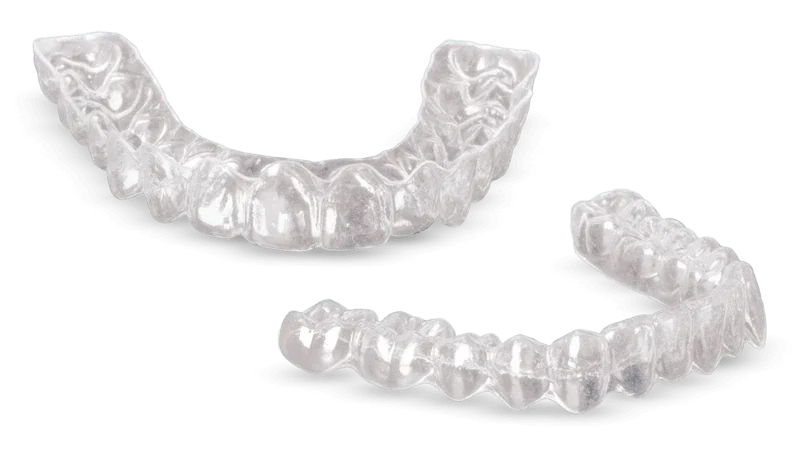
Clear aligners like Invisalign offer a more discreet option. They use a series of removable, custom-made trays, switched each week, to achieve similar results without metal brackets. Because the aligners come out to eat, there are no food limitations, and check-ins happen every 12 to 16 weeks. Invisalign may not be right for certain cases of misalignment or complex bite problems, and Dr. Bussick will recommend the best option during your exam.
People often worry that straightening teeth means pulling them. With recent advances in technology, extracting teeth is not the normal course of treatment.
Other Conditions Orthodontists Treat
Orthodontic care reaches beyond crooked teeth. At our office, we also offer treatment for temporomandibular joint disorder, cleft lip and palate, and cosmetic gum problems.
The temporomandibular joint sits just in front of the ear, where the jaw meets the skull, and problems there can cause jaw pain, ear pain, clicking, or headaches. Once a problem is accurately diagnosed, conservative TMJ treatment methods are often the most effective for long-term relief. Dr. Bussick was also one of the founding members of the Kids First Clinic in Fort Wayne and provides orthodontic care for children with cleft lip and palate. For an uneven gumline or a gummy smile, he offers laser gum re-contouring, a gentle, virtually painless procedure that he performs himself.
What Treatment Looks Like Day to Day
Treatment begins with a consultation. Your first visit includes x-rays, photos, and a thorough examination by Dr. Bussick, who then discusses a treatment plan customized for you. We use digital x-rays, which give clear, detailed images with less radiation than traditional film. Your treatment coordinator then reviews the recommendations and your financial options, and if you decide to begin right away, we reserve time at the end of the visit to get started.
Once treatment is underway, most of it happens in everyday life. You may feel some discomfort after certain visits, and pain relievers such as Advil or Tylenol can help. Emergencies are rare. If something breaks or a wire is irritating, call our office, since most issues can be resolved over the phone. And yes, you can keep playing your musical instrument with braces, although there may be an initial period of adjustment.
Why Retainers Matter
Finishing braces or aligners is a big milestone, but it isn’t the end of the story. Teeth move throughout life, and it can take at least 4 to 6 months for their new position to become permanent. During that time and beyond, teeth try to shift back toward where they started, which is called relapse. Wearing your retainers every day for the first 6 months after treatment, and then every night for the rest of your life, is what keeps your new smile in place.
Getting Started
Understanding the basics of orthodontics can help you make informed decisions about your family’s care. Regular orthodontic evaluations, especially during childhood and adolescence, can identify and address issues early. If you are considering treatment or have questions about how it might benefit you, schedule a free consultation at either Fort Wayne office or call (260) 436-2255.