
Orthodontic treatment can help some TMJ and jaw pain, specifically when a poorly fitting bite is part of the problem. It is not a cure-all. Much of the pain blamed on the jaw comes from muscles, headaches, or the joint itself, so accurate diagnosis comes first.
Dr. Timothy J. Bussick evaluates jaw pain and TMJ symptoms at both of our Fort Wayne offices. Here is what patients should understand before assuming braces or Invisalign will make the pain go away.
What Is the TMJ, and What Is a TMJ Disorder?
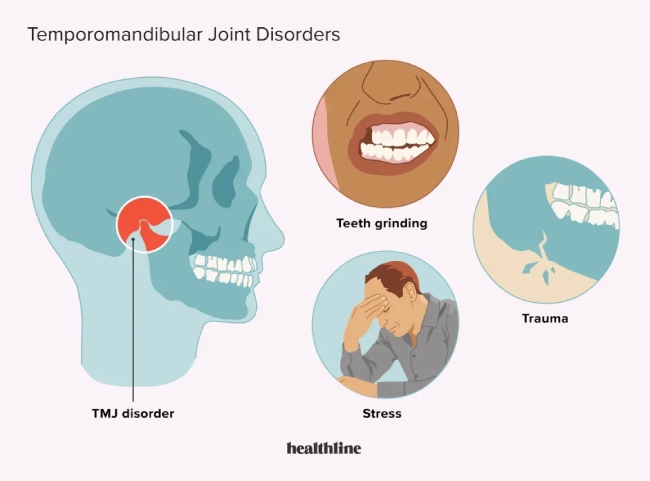
The temporomandibular joint, or TMJ, sits just in front of the ear, where the lower jaw meets the skull. You use it every time you talk, chew, or yawn. Like other joints in the body, it can be affected by arthritis, injury, dislocation, and developmental problems.
Temporomandibular joint disorder goes by several names, including TMJD, TMD, TMJ, and TMJ syndrome. It is a broad term for acute or chronic inflammation of the joint, and it can cause significant pain and make everyday function harder.
What Are the Common Symptoms?
Patients with TMJ disorders describe a range of symptoms, including:
Ear pain, jaw pain, and cheek pain; popping or clicking in the joint; ringing or other noise in the ears; headaches where the hinges of the jaw meet the upper face; limited opening of the mouth; and, in some cases, a jaw that dislocates.
Because these symptoms overlap with so many other conditions, they are easy to misread. Feeling one or two of them does not automatically mean the joint is the source.
How Can Your Bite Affect Jaw Pain?
Your bite is the way your upper and lower teeth meet. When teeth are crowded, tipped, or out of position, or when the upper and lower jaws do not line up, the jaw may close in a way that puts uneven pressure on the teeth, muscles, and joints. Over time, some people notice fatigue or soreness when they chew.
Orthodontic treatment exists to correct misaligned teeth and jaws. Straightening teeth and correcting overbites, underbites, and crossbites creates a balanced bite, which can ease stress on the jaws. For a patient whose evaluation shows the bite is a genuine part of the problem, braces or Invisalign can be one piece of a long-term plan.
When Won’t Braces Fix TMJ Pain?
This is where many patients get bad advice. Many people with daily headaches have been misdiagnosed with TMJ problems, and some have even undergone major surgical reconstruction of the joint without any relief. Most so-called “TMJ headaches” are actually muscle pain (called myofascial pain syndrome), migraine, or chronic daily headache.
If the real cause is a muscle problem, a headache disorder, or a condition inside the joint itself, moving teeth will not address it. Starting braces in that situation adds time and cost without solving the pain. That is why Dr. Bussick favors conservative care: once an accurate diagnosis is made, conservative treatment methods are often the most effective path to long-term relief.
How Do Different Causes Compare?
The table below shows how the most common sources of jaw pain line up with orthodontic care. It is a general guide, not a diagnosis.
| Possible source of jaw pain | What it can feel like | Where orthodontics fits |
|---|---|---|
| Bite that does not fit together well | Jaw fatigue, uneven pressure when chewing | May be part of the solution once an evaluation shows the bite is a factor |
| Muscle pain (myofascial pain) | Aching in the cheeks, temples, or jaw muscles | Usually managed with conservative care first, not braces alone |
| Migraine or chronic daily headache | Headaches that seem to come from the jaw | Not a reason for orthodontic treatment; an accurate diagnosis comes first |
| Teeth grinding (bruxism) | Sore jaw on waking, worn enamel | A clear occlusal guard can protect enamel from grinding |
| Joint conditions such as arthritis or injury | Pain, popping, or limited opening | Needs careful evaluation; braces do not treat the joint itself |
Who Is Most Likely to Benefit?
The patients most likely to benefit are those whose exam shows a clear bite problem, such as an overbite, underbite, or crossbite, alongside their jaw symptoms. In those cases, correcting how the teeth and jaws fit together addresses something real rather than guessing at a cause.
Age matters too. Children sometimes show early signs of jaw problems as they grow, which is one reason Dr. Bussick and the American Association of Orthodontists recommend a first orthodontic evaluation by age 7. When a jaw discrepancy is found early, Phase I treatment uses appliances that direct the growth relationship of the upper and lower jaws, so the jaws relate to each other properly as a child develops. Our page on orthodontics for kids explains how that early phase works.
Adults can benefit as well. As long as the teeth and gums are healthy, orthodontic treatment is possible at any age, and an adult whose bite has contributed to jaw strain is not too late to correct it.
Braces or Invisalign: Does It Matter for TMJ?
When orthodontic treatment is appropriate, both braces and Invisalign can correct the alignment and bite problems that contribute to jaw strain. Traditional braces are highly effective for more complex bite problems. Invisalign moves teeth with a series of custom-made, removable aligners and needs office visits only every 12 to 16 weeks, compared with every six to eight weeks for braces.
Invisalign is not right for every case of misalignment or every complex bite problem, so the choice should come from your exam rather than a preference alone. Dr. Bussick has offered Invisalign since it first became available and holds Diamond Top 1% Invisalign Provider status, and he will explain which approach fits your bite. You can compare both on our Invisalign and braces pages.
Can Grinding Your Teeth Make It Worse?
Teeth grinding, or bruxism, puts heavy force on the teeth and jaw muscles, often during sleep. Protecting the teeth is part of the answer. Invisible retainers, also known as occlusal guards, are clear removable trays that hold teeth in place and also protect enamel from grinding. For patients finishing orthodontic treatment, that can be a helpful option. Our retainers page explains the types we use.
What Should You Do If Your Jaw Hurts?
Start with an evaluation, not a treatment. Pay attention to when the pain happens, whether your jaw clicks or locks, and whether you wake up with soreness, then share those details at your visit. Avoid committing to anything invasive, including surgery, before your symptoms have been carefully assessed.
At Bussick Orthodontics, that evaluation begins at a free consultation. Dr. Bussick will examine how your teeth and jaws work together and explain whether your bite is likely playing a role. Learn more on our TMJ treatment page.
One practical note: we are unable to file medical claims for TMJ patients, but we will provide any documentation you need to file the claim yourself.
Frequently Asked Questions
Can braces cause TMJ problems?
Some patients notice temporary soreness as teeth begin to move, which is normal and usually eases. If jaw pain persists during treatment, let your orthodontist know so the cause can be evaluated.
Are all headaches caused by the jaw?
No. Most “TMJ headaches” are actually muscle pain, migraine, or chronic daily headache. That is why accurate diagnosis matters before any treatment begins.
Will insurance cover braces for TMJ?
Many dental insurance plans include orthodontic benefits, and our staff will verify your coverage. We cannot file medical claims for TMJ patients, but we will give you the documentation needed to file it yourself.
Is TMJ disorder curable?
It depends on the cause. Once a TMJ problem is accurately diagnosed, conservative treatment methods are often the most effective option for long-term relief.
If jaw pain is affecting your day, schedule a free consultation and get an accurate answer before deciding on treatment.