
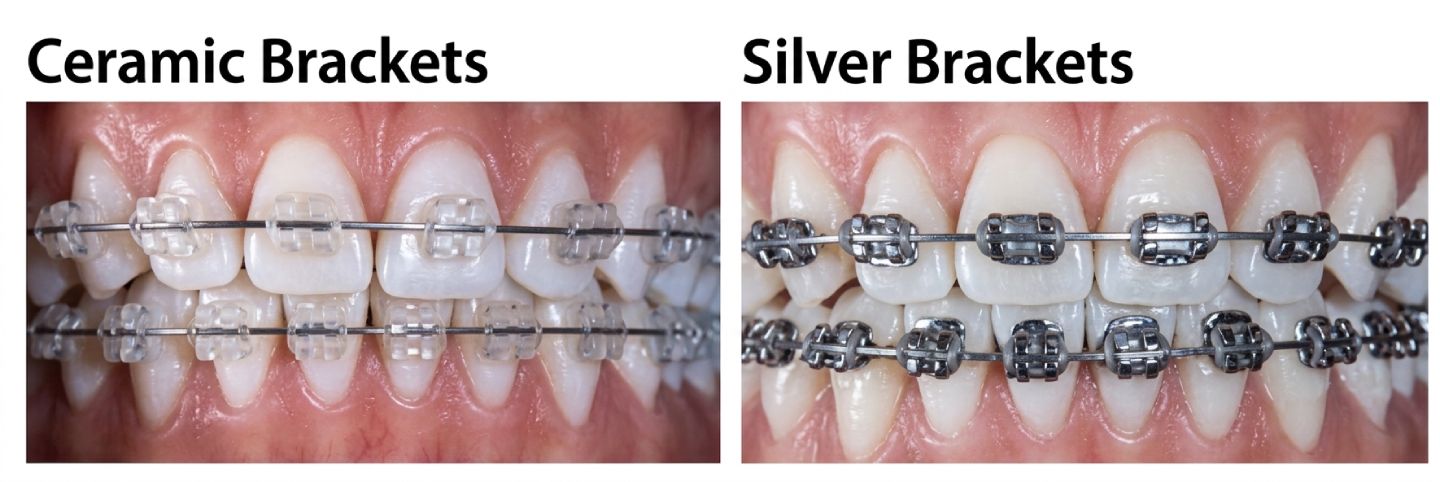
Clear braces and metal braces straighten teeth the same way: brackets bonded to each tooth and a wire that gently guides them into place. The real differences are how visible they are, how they hold up to daily wear, and how they need to be cared for.
At Bussick Orthodontics, Dr. Timothy J. Bussick offers both traditional silver brackets and clear brackets at our two Fort Wayne offices. Here is a straightforward look at how the two compare and how to decide.
What Are Metal Braces?
Metal braces are the classic system most people picture: small stainless steel brackets attached to the front of each tooth, linked by an archwire and held with elastic ties. They have been refined for decades, and today’s braces are smaller and more comfortable than braces in the past. New technology has also reduced the time needed to complete treatment for many patients.
Because stainless steel is so strong, metal brackets rarely break, even in younger patients who are still learning which foods to avoid. They also leave plenty of room for personality. With your choice of elastic ties, you can change colors at virtually every appointment, which is a big reason many kids and teens actually prefer silver braces.
What Are Clear Braces?
Clear braces use the same bracket-and-wire design, but the brackets are made from a tooth-colored or translucent material, often ceramic. Paired with clear or tooth-colored ties, they blend in with your natural teeth, so they are much harder to notice in conversation or in photos.
Clear brackets are not the same as clear aligners. Aligners like Invisalign are removable plastic trays, while clear braces stay fixed to the teeth for the whole treatment and are adjusted at your visits, exactly like metal braces. If you are weighing aligners as well, our Invisalign treatment page explains how that option works.
How Do Clear and Metal Braces Compare?
Here is a side-by-side view of the factors patients ask about most.
| Feature | Metal (silver) braces | Clear braces |
|---|---|---|
| How they move teeth | Brackets bonded to the teeth, connected by a wire | The same bracket-and-wire system |
| Bracket material | Stainless steel | Tooth-colored or translucent material, often ceramic |
| How they look | Visible silver brackets | Blend in with the natural tooth color |
| Elastic tie colors | Any color, changeable at almost every visit | Clear or tooth-colored ties keep them subtle; colors are optional |
| Strength | Very strong and rarely crack | Sturdy, but can chip if you bite hard foods |
| Staining | Brackets do not stain | Clear ties can pick up color from coffee, tea, and sauces |
| Appointments at our office | Every 6 to 8 weeks | Every 6 to 8 weeks |
| Often chosen by | Kids and teens who like colors, and complex bites | Adults and image-conscious teens |
Which Looks Better: Clear or Silver Braces?
This is the question behind most of the others, and the honest answer is that it depends on what you want people to notice. Clear brackets are the clear winner for subtlety. For adults who meet with clients, teach, or simply prefer that their treatment go unnoticed, they make braces far less noticeable. That is why clear brackets are a popular choice for adults who want braces without a mouthful of metal.
Silver braces are more visible, but many younger patients see that as a feature. Being able to change elastic tie colors at almost every appointment is part of the fun for them.
Are Clear Braces as Effective as Metal Braces?
Both types use the same mechanics, so both can straighten crooked teeth and correct bite problems. Braces in general work for nearly every age and nearly every bite, which is one reason they remain such a dependable choice.
There are a few practical differences. Clear brackets are made from a material that is more brittle than steel, so they can chip if you bite into something very hard. Some orthodontists also find that certain complex cases move a little more predictably with metal brackets. That is not a reason to rule out clear braces; it is a reason to let your orthodontist look at your bite before you decide. Dr. Bussick will tell you plainly if one type suits your case better.
What Are the Downsides of Clear Braces?
The main trade-offs are staining and durability. The brackets themselves resist discoloration, but clear elastic ties can pick up color from coffee, tea, curry, tomato sauce, and similar foods. The good news is that ties are replaced at each adjustment, so any discoloration is temporary. Brushing after meals and rinsing after dark drinks keeps them looking their best between visits.
Because clear brackets are less forgiving of hard foods, patients need to be a little more careful with things like hard candy, ice, and crunchy snacks. In general, clear brackets also cost more than metal at many practices because of the material involved. At our office, the fee for your treatment is set after your free exam and depends on your treatment plan, not on a one-size price list.
Is the Treatment Process Different?
Not really, and that surprises many families. With either type of braces at Bussick Orthodontics, treatment starts with a complimentary exam that includes digital x-rays and photos. Dr. Bussick maps out a personalized plan, and you will know what we recommend and how long it should take before anything is placed on your teeth.
Once braces are on, you will visit our Southwest or North Fort Wayne office every six to eight weeks for adjustments. Some discomfort after certain visits is normal, and pain relievers such as Advil or Tylenol can help. If a wire irritates your cheek, orthodontic wax usually solves it until your next visit.
When treatment is finished, the braces come off and retainers go in. Wearing your retainers faithfully is what keeps your new smile in place, whichever bracket type you chose. You can read more about each stage on our braces in Fort Wayne page.
How Do I Choose Between Clear and Metal Braces?
A few questions usually settle it:
How much does visibility matter to you? If you want your braces to fade into the background, clear brackets are the better match. If you are happy to show them off, metal braces with colorful ties can be part of the fun.
How careful can you be with food? Clear brackets ask a little more discipline with hard and staining foods. For younger children, metal is often the more practical pick.
What does your bite need? Your orthodontist’s recommendation should carry weight here, especially for complex cases.
How does it fit your budget? Payments can be spread out interest-free over a period of months after a down payment, and our team will work with your insurance to maximize your benefits. The financial options page explains how it works.
Many families find that the decision differs from one person to the next. A teenager might choose bright colors while a parent goes with clear brackets, and both get the same quality of care.
Frequently Asked Questions
Are clear or silver braces better?
Neither is better for everyone. Both use the same system to move teeth. Clear braces are less noticeable, while metal braces are stronger and let you show off tie colors. The right choice depends on your bite and your priorities.
Do clear braces turn yellow?
The brackets themselves resist staining, but clear elastic ties can absorb color from foods and drinks. Since ties are replaced at each adjustment visit, the discoloration does not last.
Can adults get clear braces?
Yes. Clear brackets are a popular choice for adults because they make braces less noticeable. As long as you have healthy teeth and gums, you can have braces at any age.
How do I find out which type is right for me?
Start with a free consultation. Dr. Bussick will examine your teeth, review x-rays and photos, and explain which type of braces fits your smile best.
Still deciding? Book a free consultation at either Fort Wayne office and see both options in person.